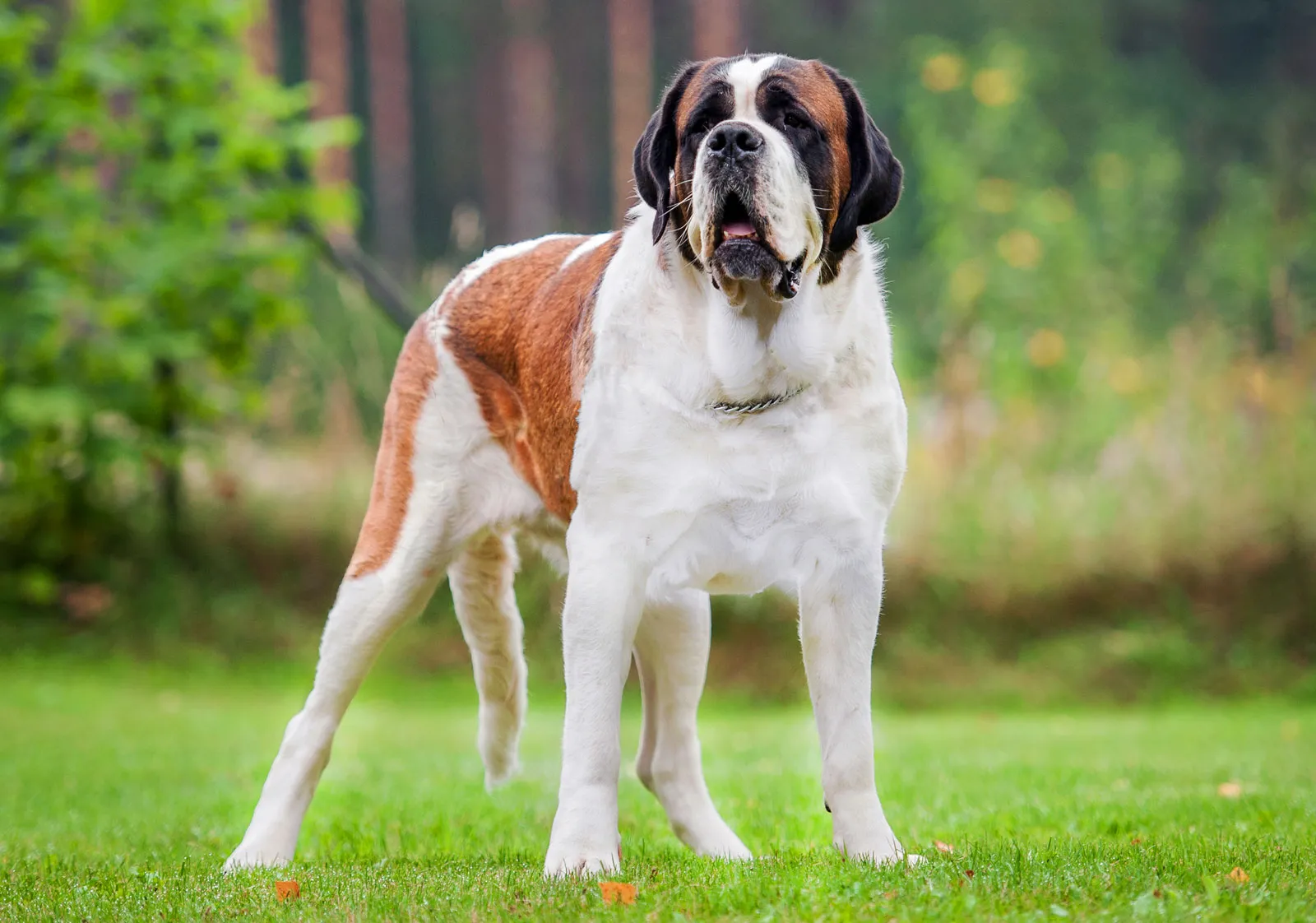
Saint Bernard
The gentle Alpine rescuer with a heart as big as its size
Origin & History
Saint Bernards originated in the Swiss Alps, where they were developed by monks at the Great St. Bernard Hospice around 1660-1670. The breed descended from ancient mastiff-type dogs brought to the region by Roman armies. They were originally used as guard dogs and companions at the hospice, but their exceptional sense of direction and resistance to cold made them ideal for Alpine rescue work. The most famous Saint Bernard, Barry, saved between 40-100 lives during the early 1800s. The breed nearly went extinct in the 19th century due to severe weather and avalanches, but was revived through crossbreeding with Newfoundlands. The AKC recognized the breed in 1885, and they continue to be celebrated for their rescue heritage and gentle nature.
Physical Characteristics
Saint Bernards are one of the largest dog breeds, with males typically weighing 64-82 kg and standing 70-90 cm tall, while females weigh 54-64 kg and stand 65-80 cm tall. They come in two coat varieties: short-haired (smooth) and long-haired (rough), both dense and water-resistant. Their coloring is always white with red, mahogany, or brindle patches. They have a massive head with a powerful muzzle, kind dark eyes, and medium-sized ears that hang close to the head. Their expression is intelligent and gentle, reflecting their calm temperament. Despite their enormous size, they move with power and grace, and their substantial bone structure gives them impressive strength for rescue work.
Health & Lifespan
Saint Bernards typically live 8-10 years, which is average for giant breeds. They are prone to several serious health issues including hip and elbow dysplasia, heart conditions (especially dilated cardiomyopathy), bloat (gastric dilatation-volvulus), and various eye problems. Their large size puts them at risk for bone cancer and joint problems. The breed is also susceptible to a bleeding disorder called von Willebrand's disease and skin issues in their facial folds. Responsible breeders screen for these conditions through organizations like the Orthopedic Foundation for Animals. Regular veterinary care, proper nutrition, and maintaining a healthy weight are essential. Their thick coat makes them sensitive to heat, requiring climate control in warm weather.
Temperament
Saint Bernards are known for their gentle, patient, and friendly nature. They are famously good with children and have earned the nickname "nanny dogs" due to their protective yet gentle behavior around young family members. Their intelligence and willingness to please make them highly trainable, though they can be somewhat stubborn at times. Saint Bernards are typically calm indoors but need regular outdoor exercise. They form deep bonds with their families and want to be involved in household activities. While not typically aggressive, their size alone makes them effective deterrents to intruders. Their rescue heritage means they are alert to their surroundings and may attempt "rescue" behaviors like checking on family members.
Care Requirements
Saint Bernards require moderate daily exercise - several short walks rather than strenuous activity, especially during their growth period. Their coat needs weekly brushing, with more frequent grooming during seasonal shedding. The long-haired variety requires more extensive grooming to prevent mats. Due to their susceptibility to bloat, they should be fed 2-3 small meals daily rather than one large meal. Regular cleaning of facial folds is important to prevent skin infections. Their large size means they need ample space and extra-large, comfortable bedding. Regular nail trimming is crucial due to their weight. They should be protected from heat due to their thick coat and monitored for joint issues throughout their lives.
Living Conditions
Saint Bernards do best in homes with ample indoor space and access to a securely fenced yard. They are indoor dogs that want to be with their families and should not be left outdoors or alone for extended periods. Their calm nature makes them suitable for various living situations if their space needs are met. They need comfortable, extra-large bedding and space to stretch out. Their size means they're not suitable for small apartments or homes with limited space. They thrive in cool climates and need air conditioning in warm weather. Early socialization is crucial to ensure they're comfortable in various situations. Their gentle nature makes them excellent family dogs, but their size requires supervision with very young children.
Important Health Note
Saint Bernards are extremely prone to bloat (GDV), a life-threatening condition where the stomach twists. Preventative measures include feeding multiple small meals daily, using elevated food bowls, avoiding vigorous exercise before and after eating, and never allowing gulping of water. Their rapid growth requires careful nutrition management with large breed puppy food to prevent bone and joint development issues. Their thick coat makes them highly susceptible to heat stroke - they must have air conditioning and plenty of water in warm weather. Regular veterinary monitoring for heart conditions is recommended. Due to their size, they need regular joint health assessments throughout their lives.
Ideal Owners
Saint Bernards are best suited for families or individuals who have space for a giant breed and understand their special needs. They're wonderful for families with children due to their gentle, protective nature. Owners should be prepared for higher costs associated with giant breeds - more food, larger everything, and potentially higher veterinary bills. They're ideal for people who want a low-energy indoor companion but have space for a giant dog. Their calm demeanor makes them suitable for various lifestyles, but their size requires commitment to training and socialization. They thrive with owners who appreciate their gentle nature and can provide the space and climate control they need.
Training & Socialization
Saint Bernards are intelligent and generally eager to please, but their giant size makes early and consistent training essential. Basic obedience and good manners should be established while they're still manageable sizes. Socialization is crucial to ensure they're comfortable with various people, animals, and situations. Their gentle nature responds best to positive reinforcement methods - harsh treatment can damage their sensitive disposition. Leash training is particularly important given their strength. Despite their calm demeanor, Saint Bernard puppies can be quite clumsy and rambunctious, so patience during training is key. They excel in therapy work and gentle obedience when properly motivated.