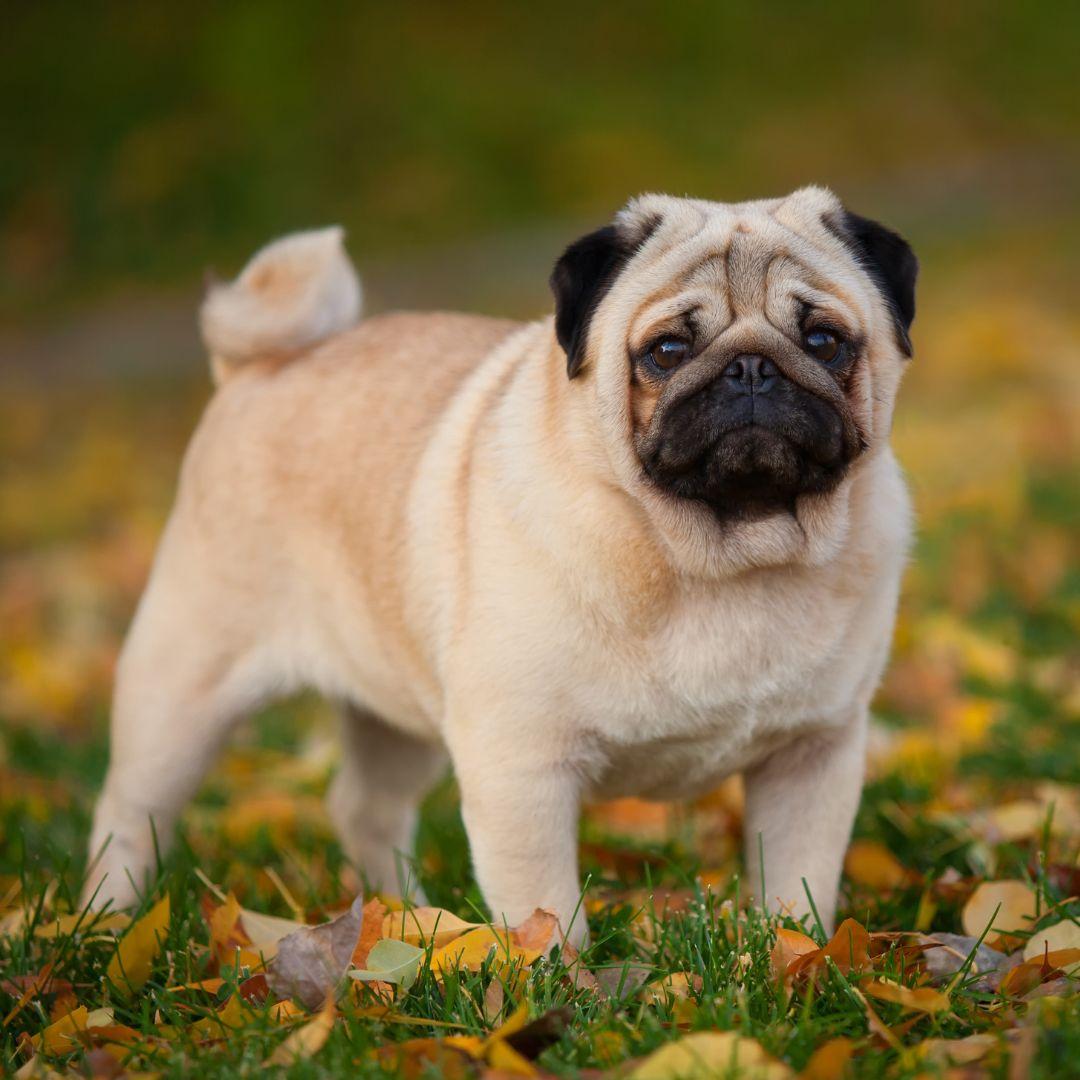
Pug
Multum in parvo - much in little - the clownish companion with a big heart
Origin & History
Pugs originated in China, where they were bred as companion dogs for royalty during the Shang dynasty (around 400 BC). Buddhist monks kept Pugs in Tibetan monasteries, and the breed later became popular with the ruling families. Pugs arrived in Europe in the 16th century with Dutch traders, where they became the official dog of the House of Orange after a Pug saved Prince William of Orange from assassins by alerting him. The breed gained popularity throughout European courts, particularly in England where Queen Victoria kept and bred them. The AKC recognized the breed in 1885. Pugs have maintained their popularity as companion dogs due to their charming personality and adaptability to various living situations.
Physical Characteristics
Pugs are small, sturdy dogs with a square, cobby build. They typically weigh 6-8 kg and stand 25-33 cm tall at the shoulder. Their most distinctive features include a large, round head with deep wrinkles, a short, flat muzzle, and large, dark, prominent eyes that convey a range of human-like expressions. They have a tightly curled tail that rests over their hip and a smooth, glossy coat that comes in fawn or black with a black mask on the face. Their compact, muscular body gives them a surprising weight for their size. Pugs move with a slight roll in their gait, adding to their charming, comical appearance.
Health & Lifespan
Pugs typically live 12-15 years. As a brachycephalic (flat-faced) breed, they are prone to several serious health issues including breathing difficulties, eye problems (corneal ulcers, dry eye), and dental crowding. Their facial wrinkles require regular cleaning to prevent skin infections. Other common concerns include obesity, hip dysplasia, and a neurological condition called Pug Dog Encephalitis. Their prominent eyes are vulnerable to injury, and their short nose makes them sensitive to heat and exercise intolerance. Responsible breeders screen for these conditions. Regular veterinary care, weight management, and protection from temperature extremes are essential for their wellbeing.
Temperament
Pugs are known for their charming, affectionate, and comical nature. They are true companion dogs that thrive on human interaction and form strong bonds with their families. Pugs are generally even-tempered, playful, and good with children and other pets. Their clownish behavior and human-like expressions make them entertaining companions. They are sensitive dogs that respond well to positive reinforcement and want to please their owners. While not typically yappy, they will alert their families to visitors. Pugs can be somewhat stubborn but are generally eager to please. They adapt well to various living situations and maintain their playful, puppy-like demeanor well into adulthood.
Care Requirements
Pugs require moderate daily exercise - short walks and play sessions are sufficient, but they should not be overexerted, especially in warm weather. Their facial wrinkles need daily cleaning to prevent infection and odor. Regular eye cleaning is important due to their prominent eyes. Dental care is crucial - daily brushing helps prevent the dental issues common in small, flat-faced breeds. Their short coat is low-maintenance, needing only weekly brushing, but they shed considerably. Weight management is essential to prevent obesity, which exacerbates breathing problems. They should be fed high-quality food in controlled portions and protected from temperature extremes.
Living Conditions
Pugs are ideal for apartment living and adapt well to various home environments. They are indoor dogs that want to be with their families and should not be left alone for extended periods. Their moderate exercise needs make them suitable for less active individuals or seniors. They are sensitive to heat and must be kept in air-conditioned environments during warm weather. Early socialization helps them become confident in various situations. Their small size and adaptability make them excellent for city living. They generally do well with children and other pets when properly introduced. Pugs thrive when they can be close to their human companions and participate in family activities.
Important Health Note
Pugs are brachycephalic and extremely prone to breathing difficulties and heat stroke. Never exercise them in hot or humid weather, and always provide air conditioning. Their short airways mean they snore, snort, and may have difficulty breathing during normal activities. Their prominent eyes are vulnerable to injury and conditions like corneal ulcers. Pugs are prone to obesity, which severely exacerbates breathing problems - strict portion control and regular weigh-ins are essential. Their facial wrinkles require daily cleaning to prevent painful skin infections. Always use a harness instead of a collar to avoid putting pressure on their delicate airways.
Ideal Owners
Pugs are perfect for individuals, seniors, or families who want a affectionate, low-energy companion. They're excellent for apartment dwellers and those with limited space. Their moderate exercise needs make them suitable for less active individuals, though they still enjoy daily short walks. Owners should be prepared for their special health needs and grooming requirements. They thrive with owners who are home much of the day, as they crave human companionship. Their charming personality makes them wonderful for first-time dog owners who understand their special needs. They're not suitable for very active lifestyles or hot climates without proper climate control.
Training & Socialization
Pugs are intelligent but can be somewhat stubborn, making training require patience and consistency. Positive reinforcement with food rewards works best. Early socialization is important to ensure they're comfortable with various people, animals, and situations. House training can be challenging with small breeds, so consistency and a regular schedule are key. Their sensitivity means they respond best to gentle, encouraging training methods. They enjoy learning tricks and can excel in obedience when properly motivated. Crate training is recommended for safety and to aid in housebreaking. Proper training helps prevent development of stubborn behaviors and ensures they become well-mannered companions.