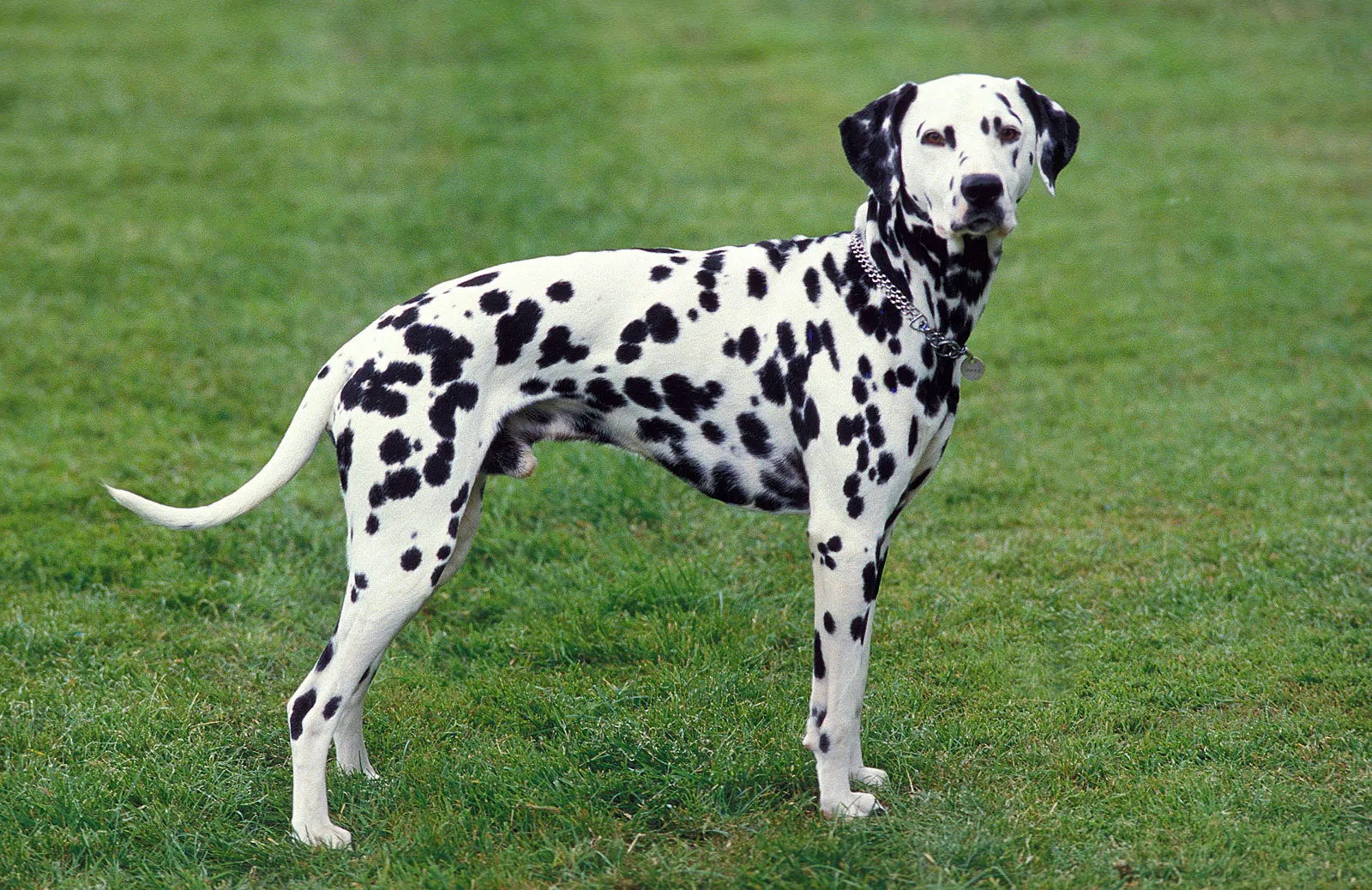
Dalmatian
The elegant spotted coach dog with boundless energy and distinctive appearance
Origin & History
Dalmatians originated in the historical region of Dalmatia in Croatia, where they served as carriage dogs, running alongside horse-drawn coaches to clear the way and guard the carriage and horses. Their endurance and affinity for horses made them perfect for this role. Later, they became firehouse mascots, riding on fire engines to clear streets and guard the firehouse. The breed was recognized by the AKC in 1888. Their popularity soared after the 1961 Disney film "101 Dalmatians," though this led to irresponsible breeding and ownership by unprepared families.
Physical Characteristics
Dalmatians are medium-sized, muscular dogs with a distinctive spotted coat. They typically weigh 20-32 kg and stand 56-61 cm tall at the shoulder. Puppies are born pure white and develop their spots over the first few weeks. Spots can be black or liver (brown) and should be round, well-defined, and distributed evenly. They have a sleek, short coat that requires minimal grooming but sheds considerably year-round. Their elegant build and balanced proportions give them a graceful, athletic appearance perfect for endurance running.
Health & Lifespan
Dalmatians typically live 11-13 years. Their most notable health concern is a genetic predisposition to urinary stones due to their unique urinary system that produces high levels of uric acid. Approximately 10-12% are born deaf in one or both ears, so BAER testing is recommended for puppies. Other concerns include hip dysplasia, skin allergies, and certain eye conditions. Responsible breeding has reduced the incidence of these issues. Regular veterinary care, proper diet, and ample fresh water are essential for their urinary health.
Temperament
Dalmatians are energetic, intelligent, and outgoing dogs with a playful nature. They form strong bonds with their families and can be somewhat reserved with strangers. Their high energy level and intelligence require both physical and mental stimulation to prevent destructive behaviors. They are known for their "smiling" expression and generally get along well with other pets, especially when raised together. Some can be strong-willed, so consistent training from an early age is important. Their hunting heritage means they may have strong prey drives.
Care Requirements
Dalmatians require substantial daily exercise - at least one hour of vigorous activity plus mental stimulation. They excel at running, hiking, and dog sports like agility. Their short coat is low-maintenance but sheds heavily year-round, requiring weekly brushing to manage. Regular ear cleaning is important, especially for those prone to allergies. Due to their urinary system, they need access to fresh water at all times and may benefit from a diet lower in purines. Dental care and nail trimming complete their maintenance needs.
Living Conditions
Dalmatians do best in homes with active families who can provide plenty of exercise and companionship. They need access to a securely fenced yard where they can run safely. While they can adapt to apartment living if their exercise needs are met, they're better suited to homes with more space. They thrive when included in family activities and can develop separation anxiety if left alone too much. Their high energy makes them better suited for families with older children who can handle their exuberance safely.
Important Health Note
Dalmatians have a unique urinary system that makes them prone to forming urate stones. They require constant access to fresh water and should be fed a diet appropriate for their special needs. Many Dalmatians do best on low-purine diets. Deafness is also a significant concern - approximately 8% of Dalmatians are born completely deaf, and 22-24% have hearing in only one ear. BAER testing should be performed on puppies between 6-8 weeks old. Never purchase a Dalmatian puppy without seeing BAER test results.
Ideal Owners
Dalmatians are best suited for active individuals or families who enjoy outdoor activities and can provide substantial daily exercise. They're perfect for runners, hikers, and those involved in dog sports. Patient, consistent owners who understand the breed's energy levels and potential health issues will be most successful. They're not recommended for sedentary lifestyles or first-time dog owners unprepared for their exercise needs and potential stubbornness. Families with very young children should consider the breed's high energy level carefully.
Training & Socialization
Dalmatians are intelligent but can be independent thinkers, so training requires patience and consistency. Positive reinforcement methods work best. Early and extensive socialization is crucial to ensure they're comfortable with various people, animals, and situations. Their high energy means training sessions should be kept short and engaging. They excel in obedience, agility, and other dog sports when properly motivated. House training is generally straightforward with consistency. Special considerations are needed for deaf Dalmatians, using hand signals and visual cues.